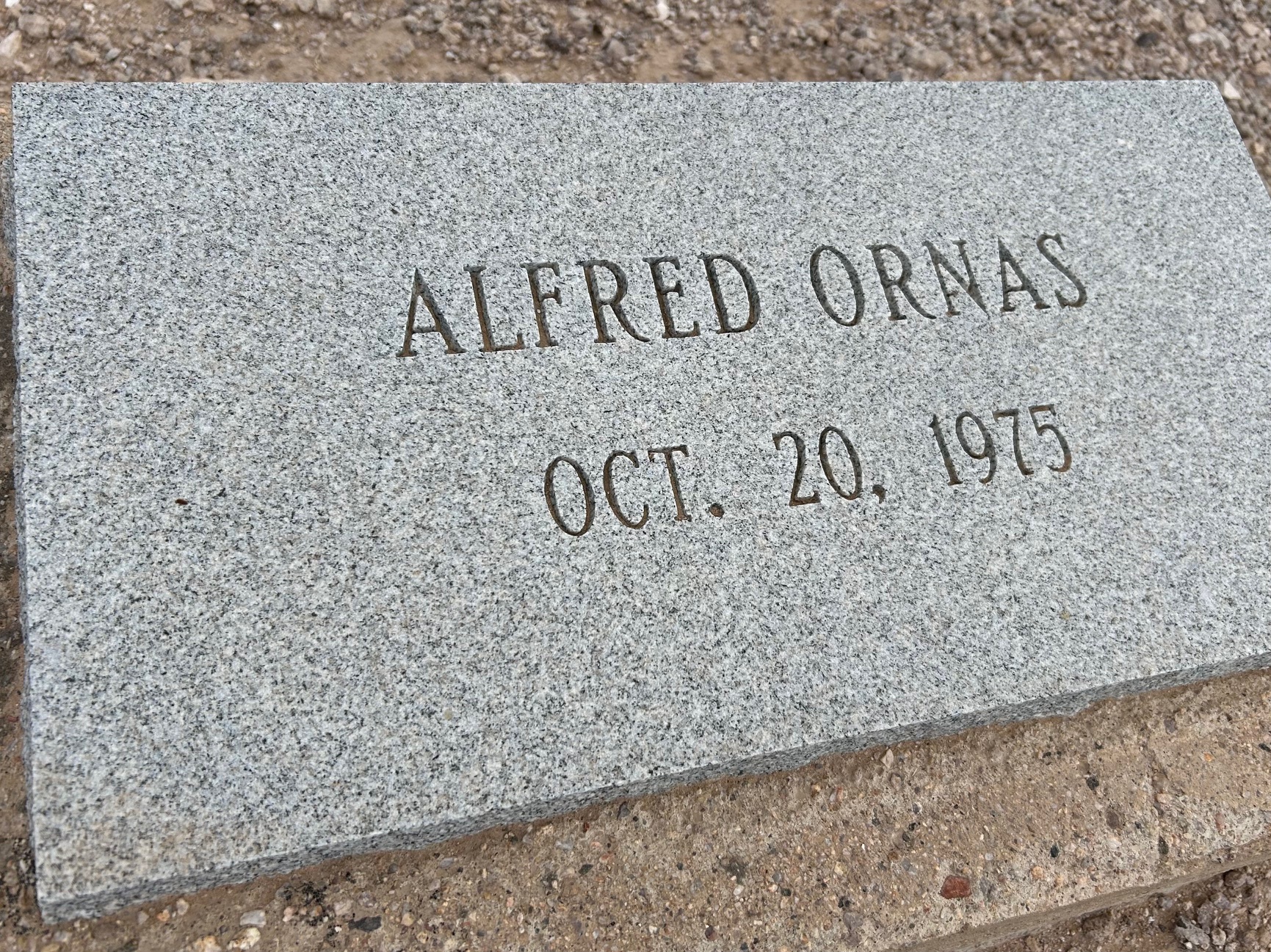
For the past couple months, I’ve been chasing a ghost.
Fifty years ago, a 53-year-old man checked into a cheap roadside motel along Route 66 in the kind of Southwestern desert town where the wind scours the sidewalks and the neon hums even when no one’s watching. He died there. Alone. Not discovered for days—maybe weeks. When they finally opened the door, the autopsy described, politely and scientifically, “extensive and severe” decomposition that made any real analysis difficult, except there’d been no foul play, no suicide. In his pocket: six bucks and change. On his left hand: a ring where a wedding band usually appears.
No police report survives. No tidy file to pull. No villain to name. It wasn’t murder. A life simply slipped out of the world without anyone noticing.
He was buried in a pauper’s grave in that desert cemetery, and he’s still there.
This should have been a shrug-and-move-on story. An almost-invisible historical footnote. But I can’t let it go. I’ve spent the past months trying to give shape to the last days of a man I never knew—trying to imagine who once wore that now-missing ring, who might have waited for him, who stopped waiting. Why his life led him there. How he got there at all.
Here’s what makes this story impossible for me to shrug off: the man in that motel room was the brother of a murder victim whose death is its own terrible chapter of American tragedy. That earlier killing—violent, senseless—echoed across decades and ultimately inspired my upcoming crime novel, DEEP END (a sequel to my mystery DEAF ROW). The fictional crime at the heart of that book is imagined, yes. But its emotional DNA comes from a real-life wound. A real family shattered.
Now I find myself staring at the brother’s lonely death and thinking: how much grief can one bloodline absorb?

Coming May 5, 2026
The murdered brother’s story at least had a headline. A file. A reckoning of sorts. The man in the motel room received none of that. His death was quiet, administrative. A body found. A form filled out. A burial paid by the county.
But here’s what I can’t stop circling: every death, even the unheralded ones, deserves respect.
That theme runs like a current beneath DEEP END. The novel grapples with crime, yes—but more than that, it wrestles with memory. With what we owe the dead. With the idea that a life doesn’t become less meaningful because it ended without witnesses. In fiction, I can insist on that truth. I can demand that characters pause, look closer, refuse to let a body become just evidence.
In real life, it’s harder.
The brother who died in that motel room had six dollar bills in his pocket. That’s the ledger line. But he also had a history. He had someone who once slipped a ring on his finger. He had a childhood, a brother, a mother. He had days when he laughed. Maybe he carried guilt. Maybe he carried secrets. The desert swallowed the details, but they existed.
When I should have let the record stand as-is—thin, incomplete—I’ve instead become a little obsessed with stitching together something more. Not to sensationalize his death. Not to rewrite it into melodrama. But to offer him what the paperwork did not: witness.
Maybe that’s the deeper reason I write about crime—fact or fiction—at all. Not for the body count. Not for the twists. But for the insistence that the dead are not props. They are people.
And even fifty years later, in a little Route 66 town, some of them are still waiting for someone to remember.