Almost fifty years ago, three people disappeared into one of Wyoming’s darkest stories.
A young mother. Two little boys.
For nearly half a century, the absence of Virginia, Reagan, and Richard Uden has become its own kind of presence.
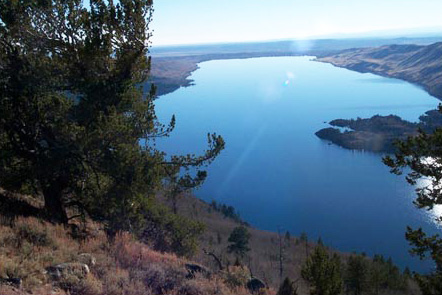
Right now, experts and investigators are searching Fremont Lake, a deep, dark lake where their killer said he disposed of their bodies in 1980. The outcome is uncertain. Lakes are good at keeping secrets and killers are liars. I’ve covered enough criminal investigations to know that hope and certainty are not the same thing.
But I’ve also learned something else: Sometimes the search itself matters.
I’ve spent most of my professional life reporting crime. Reporters are trained to ask familiar questions: What happened? Who did it? How? Why? Those are necessary questions because justice depends on answers.
Over the years, though, another question has become more important to me: What do we owe the victims?
 That question has haunted me through the years I spent researching and writing Alice & Gerald. It has followed me into every conversation about this case since the book was published in 2019. It follows me now as divers and underwater drones prepare to descend into the glacial water.
The victims of violent crime eventually become stories. That’s inevitable. Their names become chapter titles, newspaper headlines, court exhibits, documentaries. Time has a way of sanding away the edges of lives until all that remains is the crime itself.
But Virginia, Reagan and Richard were never simply victims. They were a family.
Long before they became a mystery, they belonged to someone. They laughed. They celebrated birthdays. They had favorite foods and bedtime routines and dreams that ended far too soon.
One of the oldest measures of civilization is not how we treat the living, but how we honor our dead. Long before we built cathedrals or courthouses, we buried those we loved with tenderness. We marked places. We remembered names. We refused to let people simply disappear from the earth.
Claire Martin understood that better than anyone.
For three decades, she refused to let her daughter and grandsons become forgotten names in an old case file. She searched when others grew weary. She believed when evidence seemed exhausted. She spent every penny she owned to keep their absence on the minds of a series of detectives. Heartbreakingly, she died just months before the investigation finally broke open.
Years earlier, Claire had purchased a grave in tiny Glendo WY. And it has waited ever since. I have often thought about that simple act. It wasn’t an expression of surrender. It was an expression of faith. Faith that one day they would come home. Whether that day arrives during this search, no one can say.
I wish I could stand on the shore of Fremont Lake for this search. After living with this story for so many years, it feels like a chapter I should see with my own eyes. Unfortunately, a longstanding keynote commitment, made many months ago, is one I simply cannot break. I regret that deeply. But whether I’m standing beside the lake or hundreds of miles away, my thoughts will be with the investigators, the volunteers, and, most of all, with Virginia, Reagan, and Richard.
My head reminds me that hope doesn’t equal certainty. My gut fears they aren’t there, and might never be found. My heart cannot help hoping searchers find them in the first place they look.
Whatever happens in the days ahead, I hope we remember that this search is about something larger than solving another cold case. It is about refusing to forget. It’s about keeping a promise to a mother and her two little boys who, wherever they may rest today, still deserve the simple grace every human being deserves in the end:
To be found.
To be brought home.
To be remembered.
Want to know the whole story?
Check out Ron’s book ‘Alice & Gerald: A Homicidal Love Story’
Cover photo by Pinedale Travel; inset photo by Imleedh Ali