
There are two kinds of priests in fiction.
The first wears immaculate vestments, speaks in ecclesiastic riddles, and inevitably knows more about the murder than he lets on. The second is Father Bert Clancy, who quickly emerged from DEAF ROW as a fan favorite.
Father Bert is a former combat chaplain in Vietnam who returned Stateside after the war with views about humanity that the Church found too radical. In his younger days, the rebellious Father Bert displayed an inconvenient habit of asking large questions out loud, particularly when large questions were unwelcome. He was “reassigned” to St. Barnabas, a decrepit little mountain parish in Midnight CO. Reassigned is a gentle church word. Exiled might be closer.
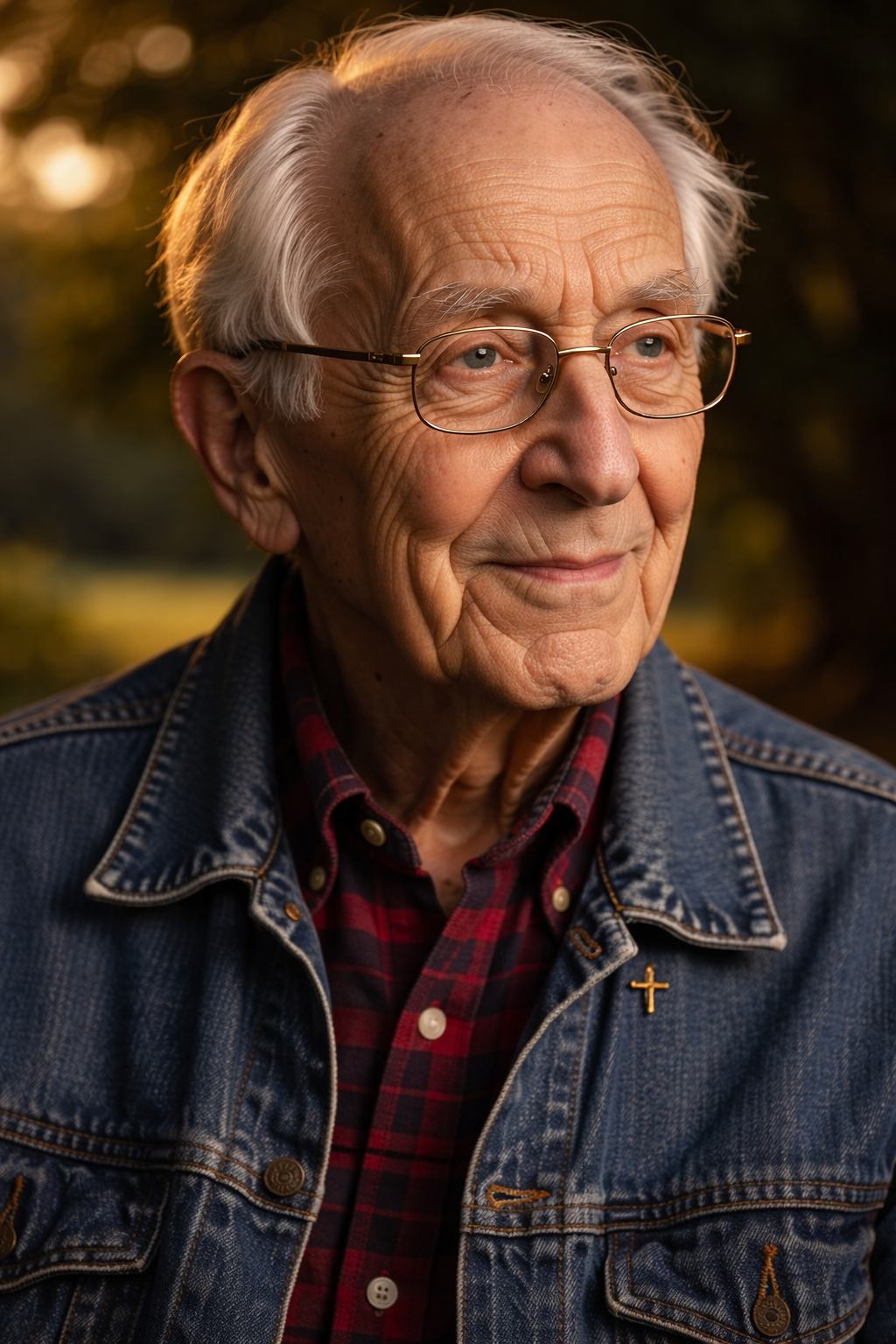
Father Bert Clancy (in AI’s mind)
But God works in mysterious ways. Father Bert’s exile introduced him to his closest friend Woodrow “Mountain” Bell, the retired Denver homicide detective at the center of sequel DEEP END, a man carved from granite and bad coffee. He is blunt, impatient, cynical, suspicious by training and temperament. If Bell is the fist, Father Bert is the open palm. Bell is evidence, Bert is grace. Their friendship is less a theological debate than a daily negotiation between justice and mercy.
From the beginning, Father Bert was never meant to be comic relief. He was meant to be ballast.
In both books, he offers morning blessings at the coffee klatsch affectionately known as Deaf Row—an almost-daily gathering of codgers who save the world daily because they’ve got nothing else to do. Readers began sending me notes saying they’d clipped those blessings, shared them at book clubs, even read them at Bible studies. Which tells me something important: people are hungry for moral reflection that doesn’t feel like a scolding.
Father Bert’s blessings are rarely orthodox in tone. In DEAF ROW, he prayed, “Lord, please grant us the senility to forget the people who never liked us, the good fortune to run into the ones who did, and the eyesight to tell the difference.” That’s pure Father Bert. His humorous (but always on-point) blessings continue in DEEP END.
But what purpose does he actually serve in the story? Simple: he slows Woodrow Bell down.
In the architecture of ancient storytelling, Woodrow Bell is the reluctant warrior crossing thresholds into darkness. Father Bert is his lantern-bearer. Every hero requires a mentor, but more importantly, he requires equilibrium—a counterweight that keeps the hero’s descent from becoming annihilation. Father Bert is that balance. He anchors Bell to something older and steadier than rage. When the abyss tempts Bell toward righteous fury, Father Bert reminds him that the goal is not conquest but restoration. In mythic terms, he is the quiet voice at the edge of the cave saying, “Remember why you entered.” Without him, Bell’s journey risks becoming mere retribution. With him, it becomes transformation.
But he’s no plaster saint.
Father Bert’s humor disarms. His humility invites. He hunts, he drinks, his vocabulary can be light blue. He’s a terrible driver. He cheers for the Broncos. He’s a man who has wrestled with his own institution and stayed anyway. That’s what makes him luminous: he does not float above the human condition; he sanctifies it from within.
In DEEP END, on a Saturday morning in the Midnight cemetery, we find Father Bert, sleeves rolled up, painstakingly washing headstones with rainwater he collects specifically for this sacred task. It’s not church-sanctioned, not required, not even noticed by most of the living. He does it because he believes the forgotten deserve a little dignity, because memory itself is a sacrament. Watching him rinse lichen from a stranger’s name, you understand his theology: faith is maintenance, reverence is practical, and love extends even to those who can no longer thank you for it.
Father Bert represents the moral imagination of the series. Not morality as rulebook, but morality as relationship. He doesn’t excuse wrongdoing; he contextualizes it. He doesn’t undercut Bell’s pursuit of justice; he humanizes it.
In a genre crowded with damaged detectives and shadowy clergy, Father Bert Clancy stands at the coffee pot each morning and offers this radical proposition: that truth matters, mercy matters more, and you can hold both in the same weathered hands.
And he makes a mean venison stew.
Pre-order DEEP END now!
Wherever you buy books